
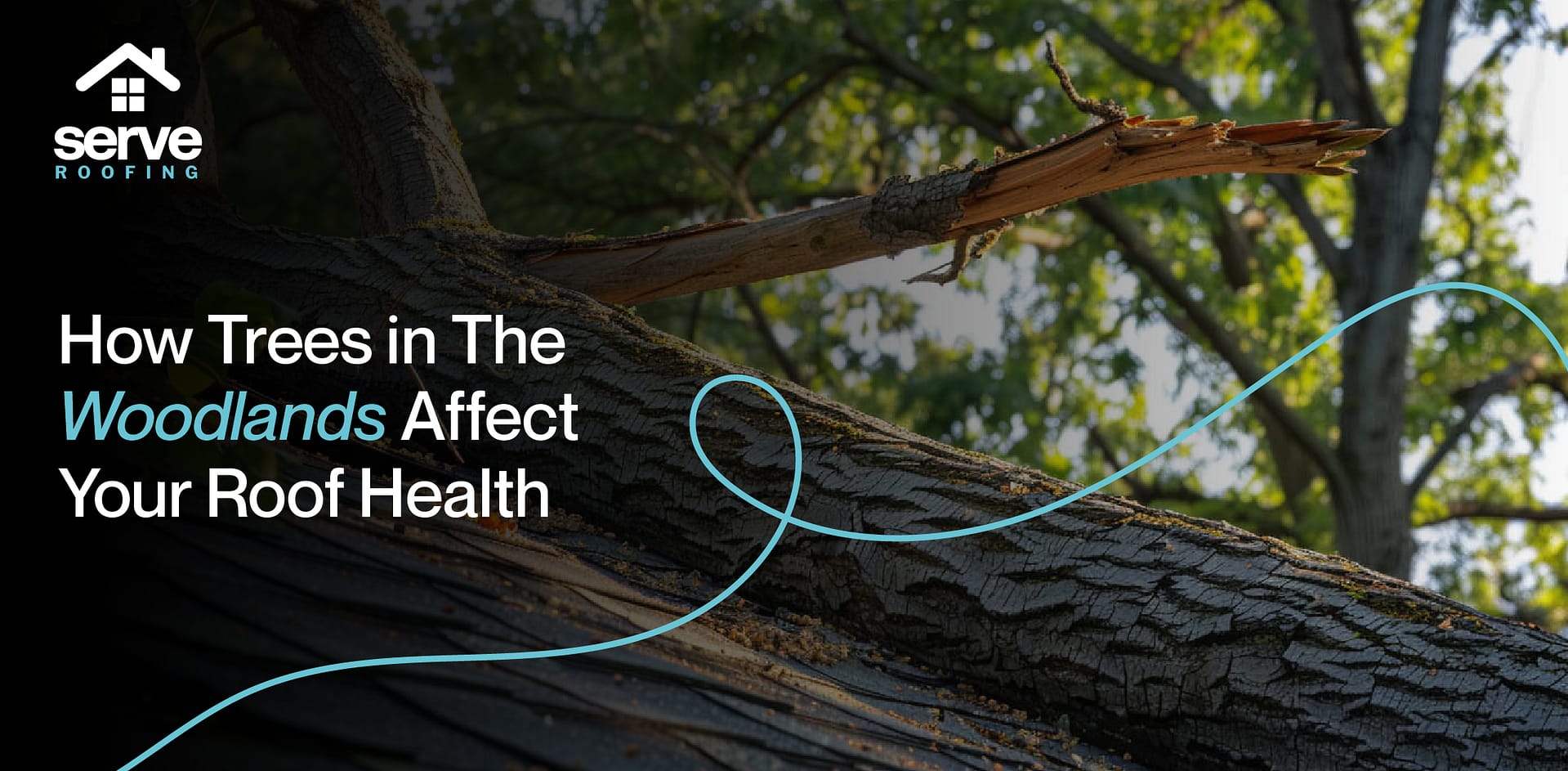
How Trees in The Woodlands Affect Your Roof Health
Living in The Woodlands has its perks; it’s a stunning area near Lake Woodlands, known for its breathtaking views, tree-lined streets, and naturally shaded backyards. But those same trees that make our neighborhood so beautiful can also pose serious risks to your roof if they’re not properly maintained.
As the leading roofing company in The Woodlands, Texas, we’ve seen how trees in the Woodlands affect roof health and can lead to unexpected and costly repairs. Roofing services that proactively address tree-related risks can save you from major issues later.
If you’ve ever wondered how close is too close when it comes to trees and shingles, this guide is for you. We’ll walk you through the most common causes of tree damage that roof Woodlands homeowners face and how to prevent them before they turn into expensive problems. Stick with us to protect your roof.
The Relationship Between Trees and Roofs
How trees in The Woodlands affect roof health often comes down to small issues like branches brushing against shingles, leaves clogging gutters, or constant shade with no exposure to sunlight, encouraging moss and algae growth.
Now, don’t get us wrong, trees are important. They provide the oxygen we breathe and much-needed shade during those scorching summer months. But in an area known for tall, mature trees, your roof is more at risk than you might think. If left unchecked, this peaceful coexistence will quickly turn into costly repairs. For ongoing prevention, consider professional gutter cleaning and installs alongside proactive roof maintenance.
Common Types of Tree-Related Roof Damage
Do you know the most common cause of roof damage? No, it’s not storm damage, it’s the trees, or untrimmed branches, and clogged gutters due to leaves.. Here are the key ways in which trees in The Woodlands affect roof health:
-
Overhanging Branches
They scrape shingles, loosen tiles, and cause surface wear, especially during storms or windy days.
-
Falling Limbs
Large branches can puncture roofing systems, break gutters, or cause major structural damage.
-
Clogged Gutters
This is the most common issue. Leaves, twigs, and seeds block water flow, leading to standing water and roof leaks.
-
Trapped Moisture
Tree debris traps moisture, accelerating rot and weakening roofing materials.
-
Shade and Limited Sunlight
Constant shade promotes moss, algae, and mold, especially on north-facing roof sections.
-
Sap and Organic Debris
Tree sap can stain and degrade shingles over time, while accumulated debris creates hotspots for decay.
These issues might seem minor, and at first, they are. But when branches keep scraping shingles and roof gutter clogging due to leaves, it’s only a matter of time before a bigger problem shows up.
Preventative Measures to Protect Your Roof
Proactive maintenance is key in the Woodlands, where trees surround nearly every home. To protect your roof, here are some tips from Serve Roofing on how to reduce risks and protect your roof from the impact of nearby trees:
- Trim overhanging branches
- Schedule routine roof inspections
- Clean your gutters regularly
- Remove debris from the roof surface
- Watch for moss and mold growth
- Work with local arborists
You can see it’s not roof maintenance, but simple things every homeowner knows. You can avoid major repairs down the line by taking simple, consistent steps like trimming trees, cleaning gutters, and inspecting your roof regularly.
These preventative measures go a long way in maintaining your home’s safety and structure, and they directly reduce the risks tied to how trees in The Woodlands affect your roof health.
Choosing the Right Roofing Materials
The roof is part of your house’s structure; it’s important, we all know that. But making it last and protecting it depends on a variety of factors, one of which is the material you choose. With so much exposure to organic roof threats like falling branches, sap, and debris, choosing mold-resistant roofing and impact-friendly surfaces is key.
Here are some of the best roofing material innovations for homes surrounded by trees:
-
Metal Roofing
Tough, impact-resistant, low-maintenance, and ideal to stop mold growth.
-
Architectural Shingles
These heavy-duty shingles offer better defense against overhanging branch risks and are less prone to cracking from falling limbs.
-
Algae and Mold-Resistant Shingles
Treated surfaces help with moss roof prevention, especially in shaded areas where moisture lingers.
-
Concrete or Clay Tiles
Long-lasting and resistant to many organic roof threats, though heavier and often requiring stronger support.
During any project, we recommend homeowners who do not want to trim their trees to use any of these heavy-duty roofing materials based on their preferences and weather conditions. They provide robust support from branches scraping or falling on the roof.
Investing in the right materials is one of the smartest ways to reduce tree impact and improve your roof’s durability, especially when you’re dealing with Woodlands tree hazard roofing concerns.
The Role of Gutter Maintenance
If your roof gutter is clogged, water won’t have a clear path to flow and will start backing up into low areas of the roof. Over time, this creates constant damp spots, making the roof surface wet, weak, and vulnerable to leaks, rot, and algae growth. It’s one of the most common ways on how trees in The Woodlands affect your roof health. The good thing is that it’s preventable with regular gutter maintenance and inspections.
To prevent clogging, homeowners simply need to clean their gutters regularly. This one step can solve most gutter-related roofing problems before they begin.
You can also reach out to Serve Roofing; we offer free roof inspections to help identify potential damage early and keep your home protected. Our goal is to give you peace of mind by making sure your roof stays in top shape, no matter how many trees surround your home. Contact us today and let our experts handle the rest.
Working with Arborists and Roofers
Maintaining roof health in a tree-heavy area like The Woodlands takes a team effort. Partnering with certified arborists ensures trees are trimmed safely and strategically, minimizing overhanging branch risks and preventing storm-related damage.
At the same time, working with experienced roofers helps detect and repair early signs of wear caused by branches, debris, and shade. This collaboration is essential in managing roofing and landscaping together. When done right, it protects against long-term issues and highlights exactly how trees in The Woodlands affect your roof health, so you can address problems before they become costly repairs.
Partnering with Serve Roofing for Tree Hazards
There are four ways trees affect your house:
- Overhanging branches
- Leaves and Needles
- Gutter Clogging
- Trees Falling On The Roof
At Serve Roofing, we understand how trees in The Woodlands affect your roof health, and we’re here to help. That’s why we offer tailored gutter installation and cleaning services on which Woodlands residents can rely.
Our expert team is trained to identify organic roof threats early and provide cleanup, repairs, and preventative services. With experience serving over 20 areas across Texas, Serve Roofing built a reputation as one of the most trusted names in roofing. When it comes to roof-related services, we deliver exactly what homeowners need: reliable, high-quality solutions backed by local expertise.
All-In-All
Tree-related damage is often not significant at the beginning, unless a tree grows so large that the entire tree falls onto your home. Trees are a vital part of our environment, but they tend to cause the most harm to roofs following extreme weather conditions. For a broader view of how we support homeowners end-to-end, see our overview of comprehensive roofing solutions.
To keep your roof in top condition, it’s essential that homeowners hire expert roofing professionals like Serve Roofing. Our team has the experience and knowledge to handle the tree damage that Woodlands homes often face. By offering proper gutter cleaning and installation services, we know exactly how to protect your roof from long-term damage caused by nearby trees.
FAQs
-
Can overhanging branches damage my roof?
Yes, overhanging branches will scrape shingles, break tiles, and cause major impact damage during storms or high winds.
-
How does debris from trees affect gutters?
Leaves, twigs, and seeds clog gutters, leading to water overflow, roof leaks, and even structural water damage over time.
-
Do trees increase the risk of moss and mold?
Yes, constant shade and trapped moisture from overhanging trees create the perfect environment for moss, mold, and algae growth.
-
Should I trim trees near my roof?
Yes, trimming branches away from your roof reduces damage risk, prevents debris buildup, and improves overall roof health.
-
What roof materials resist organic damage?
Metal roofing, architectural shingles, and mold-resistant materials are best for resisting debris, moisture, and sap damage.
-
Can tree sap harm roofing materials?
Yes, tree sap can stain and degrade shingles over time, especially asphalt and other porous materials.
-
How can Serve Roofing help with tree-related damage?
Serve Roofing offers roof inspections, cleanup, and repairs specifically tailored to tree-related issues. These services help prevent damage and protect your home year-round.